

At Bosque Satori, we offer an integrative approach to psychological and spiritual work. Guided by experienced clinical psychologists, each with a grounded path in diverse spiritual traditions, we bring together psychotherapy, somatic practices, and principles supported by contemporary scientific research.
Our work explores the patterns, roles, and habits that shape our sense of self, recognizing them as constructed identities that, when deeply understood and integrated, can naturally dissolve, revealing a more essential dimension of who we are.
This process bridges psychological healing with a path of spiritual self-inquiry, oriented toward the direct recognition of the Self beyond identification with the body and the mind.

Index

How do we work?
We combine therapeutic and meditative tools from various psychological disciplines and spiritual traditions to facilitate a deep process of self-knowledge, healing, and connection with the present moment. Our approach integrates body, mind, emotion, and action through somatic experiential methodologies, psychodrama, expressive techniques, as well as contemplative practices and diverse meditation techniques.
Integration of psychological currents
We adopt an integrative vision that combines various psychological currents, each contributing unique perspectives and tools that complement one another:

Psychoanalysis:
Explores the influence of the unconscious and deep emotional patterns, providing a framework to understand the origin of internal conflicts.

Systemic:
Analyzes relational and contextual dynamics, fostering a broader understanding of interpersonal roles and patterns.

Gestalt:
Emphasizes full awareness and present-moment experience, allowing participants to integrate fragmented aspects of their personality and generate a more authentic connection with themselves.

Humanistic and Transpersonal:
Focuses on human potential, promoting self-realization and the recognition of essence beyond personality.

Cognitive-Behavioral: Provides practical tools to identify and transform patterns of thought and behavior that limit well-being.
Beyond the word:
from body to consciousness
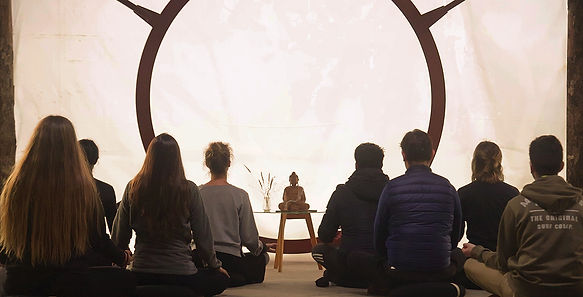
At Bosque Satori we start from a fundamental premise: body, emotion, and thought are inseparable dimensions of human experience. Many of the beliefs that limit us —and that often escape consciousness— manifest as physical tensions, automatic impulses, or emotional patterns that repeat without an apparent cause.
Psychotherapy based solely on verbal language offers valuable spaces for reflection, but its effect can remain circumscribed to the rational plane, primarily activating cortical regions of the brain. Although it provides clarity, it does not always access the deepest roots of distress nor open a truly transformative vision of its possibilities.
Our approach broadens that horizon: we integrate methodologies that allow contact with subcortical levels of the nervous system, where implicit memories, emotional reactions, and deeply ingrained habits reside. Thus, not only processes of intellectual understanding are activated, but also the natural mechanisms of regulation, transformation, and integration.
By interweaving the verbal with the bodily, the sensory with the emotional —within the framework of a group that enhances healing and learning processes, in a natural environment that calms and reconnects— we facilitate an integral therapeutic pathway. A contemporary and human proposal that unites science, presence, and community as a path back to vitality, authenticity, and inner freedom.

Experiential Body-Based Methodologies
The body-based methodologies we employ invite inhabiting the present in an embodied way, fostering self-observation and compassionate understanding of our states.
Through working with internal sensations, spontaneous movement, and bodily expression, one accesses deep layers of the autonomic nervous system, where records linked to traumatic experiences, unresolved emotions, and dormant potentials are stored. These practices allow the unlocking of automated responses, illuminating contents that are difficult to verbalize and opening the way toward a deeper integration among body, mind, and emotion.
This approach is grounded in principles of neuroplasticity, organismic self-regulation, and the neurobiology of trauma. We understand the body as an intelligent system, capable of expressing, processing, and transforming what the mind cannot always name. It not only houses the imprints of pain, but also the resources necessary to reorganize, reconcile internal experiences, and heal. By completing its natural response cycles to stress in a safe environment, the body restores its vital flow and reconnects with its innate wisdom. For this reason, we facilitate processes of integrative emotional release that allow the body and psyche to let go of what is repressed and to give new meaning to what has been lived, in a space of safety and presence.
We rely on the principles of psychodrama, somatic work, and psychoplastics, along with contributions from neuroscience. From these approaches, we integrate experiential tools such as breathing, expressive movement, dance, sound, active meditations, and the body in action as a pathway of transformation, all sustained by an observing awareness cultivated in meditative presence, both in movement and in stillness.
Somatic Experiencing:
Somatic Experiencing (SE) is a therapeutic methodology based on the neurobiology of trauma. Its focus centers on the body’s innate capacity to self-regulate and regain balance after overwhelming experiences, without the need to relive them verbally or emotionally. Unlike other therapies more centered on narrative content, SE uses physical sensations as a gateway to the autonomic nervous system. It allows identifying and releasing blockages associated with fight, flight, or freeze states—emergency responses that remain activated after traumatic or emotionally difficult situations.
This practice facilitates a safe discharge of trapped energy, restoring the sense of safety, vitality, and presence.

Psychodrama:
Psychodrama combines knowledge from clinical psychology with theater techniques to create a physical stage that represents the internal psychic world. Through this methodology, which integrates body, mind, and emotion as a simultaneous whole, participants explore intertwined thoughts, emotions, sensations, perceptions, and behaviors, significantly expanding their awareness of them and revealing unconscious associations.
Psychodrama allows us to experience that the self is not a fixed entity, but a dynamic, flexible structure composed of multiple roles. By enacting internal scenes, it becomes evident that we are not our rigid definitions, but can observe and transform them. This process facilitates the disidentification from limiting ideas about oneself, opening the way to new ways of being and relating, and maximizing our creativity and potentials. In addition, it restores the capacity to play, activating spontaneity and creativity as vital resources and reflections of psychological well-being.
By dramatizing states, roles, or scenes, this methodology can be applied at different levels: from exploring diseased organs, dream scenes, or giving form to internal voices, to addressing family, couple, or work dynamics, in a transtemporal framework that encompasses past, present, and future. Thus it fosters the flexibility of the self and the emergence of original adaptive responses.

Intrinsic regulation:
Change and motivation are not gestated from the outside, but emerge from the person’s direct experience. This process fosters intrinsic learning, self-confidence, and the perception of self-efficacy, reducing impulsivity and emotional dysregulation. Thus a more harmonious relationship is generated between internal needs and the environment, and a greater trust in life and in opportunities for growth.

Psychoplastics:
Psychoplastics is an expressive technique that allows exploring and transforming internal aspects through artistic and sensory resources. By giving shape to the abstract —emotions, thoughts, experiences— one accesses a symbolic and spontaneous understanding of the unconscious. Its visual and analog language facilitates a deep integration, especially in people who find it difficult to verbalize and/or understand their emotional contents.

Our true nature: Meditation
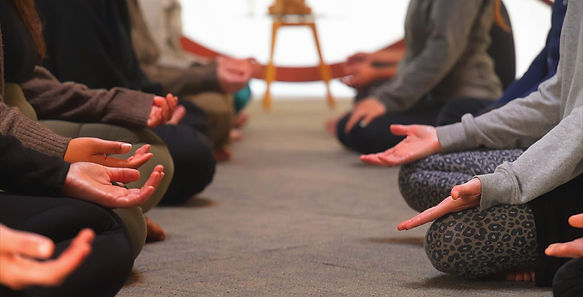
Meditation is the core and the target at Bosque Satori. It is not an added practice, but the axis from which our entire therapeutic and spiritual approach is sustained and integrated. It reveals a space of inherent calm and fullness, always accessible and connected with our true nature: a state of consciousness prior to all definition, where mental forms dissolve and only the loving presence of our Self remains.
This state is not attained, but recognized. It is available here and now, beneath mental and emotional activity, like the stillness that sustains all movement. Meditation invites us to stop and look, without effort, without expectation, discovering that we are already in contact with consciousness itself because, in fact, it is who we truly are. From this place, identification with roles, narratives, and learned patterns begins to thin out and reveal that what is sustained when we define ourselves through passing phenomena is illusory.
In that looking without judgment, a space of deep acceptance opens. What previously seemed defined and immovable —the self, the past, the emotions— reveals itself as transitory. This loving distance allows a more stable clarity to arise, the recognition that we are vaster than any experience we may have.
We use various forms of meditation: from passive practices in stillness to active meditations in movement and contemplative dynamics integrated with experiential therapies.
Beyond any technique, we invite understanding meditation as our essential being always present, always available.

Ego, essence and spirituality
We understand the ego as a dynamic psychological construction, formed by identifications with roles, thoughts, and emotions. Although it fulfills adaptive functions, facilitating the organization of experience and interaction with the world, the ego can become a subtle prison when it crystallizes and dominates our perception, disconnecting us from our essence.
We recognize that many of the ego’s defensive mechanisms —limiting beliefs, repetitive patterns, or automatic emotional responses— arise as attempts to protect us from pain. However, when these patterns are not reviewed or integrated, they end up restricting our inner freedom and perpetuating suffering. At Bosque Satori, we address them with compassion and awareness, as thresholds toward a deeper understanding of what we truly are.
Our therapeutic and spiritual approach starts from the premise that these aspects do not define our identity, but are passing constructions that can be recognized, understood, and finally dissolved. This loving disidentification from the ego allows a more complete integration of our humanity and, at the same time, opens the path toward a vaster dimension: consciousness itself.
Self-inquiry —inspired by the non-dual teachings of Advaita Vedanta— invites us to deeply question the notion of the “I” as a fixed entity. By observing with honesty and without judgment the beliefs that sustain our identity, the transitory and conditioned is revealed, and that which has always been present emerges: an essential state of unity, peace, and joy that does not depend on circumstances.
This recognition of the eternal in the midst of the changing is also pointed out in other traditions. Zen calls it the “original face”: consciousness before all thought or narrative. Mystical Christianity speaks of the “I Am,” a direct affirmation of the inner divinity. Sufism names it as the Beloved who dwells in the heart, the core of love and presence that transcends all form.
Throughout history, various spiritual traditions have pointed to the same thing: to recognize the essential beyond the changing forms of the self. Each one, from its language and worldview, has offered paths to awaken to the consciousness that we are—not as an idea, but as a direct experience. At Bosque Satori, we honor this convergence. We learn from their symbols, their contemplative practices, and their visions of the human soul to integrate the psychological and the spiritual in a living and contemporary process. We do not follow any particular religion or doctrine, but we do nourish ourselves from the deepest within diverse currents that have intuited that essence does not need to be created, only revealed.
The Group as an Amplifier of Healing

Group work at Bosque Satori enhances therapeutic and meditative outcomes by creating an environment of emotional resonance and deep connection. This approach fosters trust, openness, and mutual support, offering a space where sharing intimate experiences strengthens secure attachment and re-bonding. The group acts as a catalyst for healing by providing emotional containment and a collective network that facilitates self-exploration, the repair of damaged bonds, and the building of authentic relationships in a world affected by individualism and disconnection.
In addition, the group amplifies therapeutic elements by serving as a mirror in which participants can receive feedback and new perspectives on their psychic dynamics. This space allows for clearer observation of aspects such as fears, projections, needs, and communication patterns, as well as exploring the ease or difficulty of expressing oneself and forming bonds. Group interaction fosters the development of skills to emotionally support others and to receive that same support, generating a cycle of personal and relational transformation.
A key aspect of this work is neural synchronization, a phenomenon in which the brains of participants tend to align during meaningful social interactions. This synchronization, also known as neural resonance, strengthens emotional connection and improves mutual understanding. Studies have shown that this process not only enhances emotional regulation, but also boosts learning and empathy.
Another fundamental concept is mirror neurons, brain cells that activate both when we perform an action and when we observe others performing it. These neurons facilitate imitation, understanding, and empathy, which makes the group an ideal environment for modeling and learning new ways of relating and expressing oneself. By participating in a group guided by inner work and compassion, participants can internalize healthy dynamics that promote self-regulation and emotional well-being.
In addition, it has been observed that group meditation creates a collective field of brain coherence, synchronizing not only the brain waves but also the heartbeats of participants. This phenomenon amplifies individual benefits and promotes shared well-being, strengthening the sense of belonging and community.
The group not only acts as a space for containment and relational healing, but also enables the reconstruction of social and systemic aspects. Through these dynamics, a tribe and emotional community are fostered that support self-regulation, trust, and authentic connection.
In summary, group work at Bosque Satori combines these neuroscientific principles with therapeutic and meditative practices to create an environment of integral healing.

Psychotherapy and meditation in tuning
Meditation at Bosque Satori does not seek to take us away from the world, but to inhabit ourselves fully within it, with openness and sensitivity. It is meditation that offers the silence necessary for what has been lived through the body —emotions, movements, explored roles— to settle and be transcended. After each expressive or somatic experience, meditation opens a space where the body reveals and consciousness receives.
That combination —deep and uncommon— is what truly transforms. We not only understand what hurts us: we release it. We not only inhabit our stories: we transcend them.
The integration between experiential group psychotherapy and meditation is one of the distinctive strengths of Bosque Satori. Through it, participants actively explore emotions, roles, internal stories, and conditioned patterns, supported by a community that provides containment and resonance. Meditation, for its part, allows contemplating what has been lived with openness, silence, and compassionate presence, cultivating an attitude of kind acceptance toward oneself and others.
This alternation between action and observation, expression and silence, allows us to inhabit both the transitory dimensions and the deepest dimensions of being. We not only process and integrate aspects of our personality, but we also access a broader and more direct understanding of our essential nature. This complementarity creates a profound, transformative, and authentic therapeutic process that honors both our humanity and our transcendent dimension.
The natural environment as silent medicine

The environment surrounding Bosque Satori is not just a setting: it is an active part of the transformation process. Immersed in a landscape of native forest, crystalline river, nearby lake, and clean air, this place offers ideal conditions to restore connection with oneself and with life.
Science has shown that spending time in nature —especially in contact with trees, water, natural light, and clean air— reduces cortisol levels, strengthens the immune system, and regulates the autonomic nervous system. Living in tune with the natural cycles of light and darkness helps reestablish circadian rhythms, promoting deep sleep, greater mental clarity, and hormonal balance. Unlike the urban environment, saturated with artificial stimuli, Bosque Satori offers a space with minimal exposure to electromagnetic radiation and a night sky free of artificial light, where the stars unfold intensely. This environment favors deep rest and a more effective restoration of the nervous system.
During the day, one can swim in the lake, walk along trails, practice meditation outdoors, or simply sit and gaze. Being here is a complete sensory experience. Walking among centuries-old trees, listening to Darwin’s frogs at night, watching cows graze on the other side of the river, or simply feeling the earth under one’s feet —all of that begins to change the inner rhythm. The environment invites you to stop, observe, listen. To be. Effortlessly, it awakens a kind of contemplation that needs no techniques: only presence.
In addition to therapeutic and meditative practices, Bosque Satori offers spaces for enjoyment, lightness, and spontaneity. Sharing with others in an environment that fosters mutual care and a bond with nature generates a kind of well-being that is difficult to find in everyday life. It is, in essence, a return to something essential: presence, connection, the earth, and the pack as home.

Everyday life as a practice of consciousness
Even the simplest things —washing dishes, tidying a corner— can become a gateway to the present. When each gesture is inhabited with mindful attention, the mind quiets, the body roots, and the everyday is transformed into a joyful practice of connection, meaning, and inner silence.
The days in our gatherings invite us to give, receive, and observe ourselves in relationship. If the bathroom is clean and the food is hot, it is because someone did it; tomorrow we will do it. Thus the awareness of interdependence awakens: we inhabit a balance where shared care teaches us to trust and recognize ourselves in one another, turning daily life into a therapeutic and liberating space.
In the kitchen, we practice collaboration, coordination beyond the individual, leaving aside egoic perfectionisms, imparting the flavor of dedication, service, and mutual learning.
We have a garden and landscaping project. Using compost and cultivating with respect allows us to learn from cycles, patience, and the generosity of nature.
We build. We do carpentry, improvements, repairs. We train ourselves in serving through action, sustaining a space that sustains and welcomes us, while cultivating life skills.
And we also enjoy, creating spaces for art, celebrations, and festive gatherings. Sometimes we dress up, set up scenes, play at being others to discover new ways of being ourselves. Because in laughter, play, and beauty too, the heart opens and community blossoms.
We think together, propose ideas, seek solutions, and act in ways that sustain and benefit us all. In that living collaboration, thought becomes fertile and creative, action fills with meaning, and we move away from the automatism and conformism of this accelerated era.
Reconnection in the digital era

In times marked by hyper-digitalization, the advance of artificial intelligence, and the vertiginous transformations of robotics in the current fourth and fifth industrial revolutions, it becomes increasingly necessary to return to the body, to the earth, to silence, and to direct experience. We live in a culture that tends to accelerate, externalize, and dissociate, promoting an ideal of efficiency that often leaves aside what is most essential: connection with oneself, with others, and with the living world we inhabit.
Places like Bosque Satori offer a vital space for reconnection, where the human can unfold without artifice: from stillness, inner listening, and the wisdom of the body. The natural environment is not only a physical context: it is an active agent of transformation. The forest, the river, the sky, and the rhythms of the earth invite us to slow down, to regulate the nervous system, and to remember a deep truth: we belong.
In the midst of an increasingly automated world, where technologies can collaborate in many aspects of life but can also encourage internal disconnection, cultivating spaces of presence, bonding, and embodied listening becomes essential. It is not about rejecting technological progress, but about not forgetting that which no machine can replicate: the authenticity of lived experience, the warmth of encounter, the calm that emerges from silence, the creativity that is born from the void.
Bosque Satori does not offer only techniques and processes, but also a community and an environment where the essential can be remembered, lived, and embodied. Because in an era that seems to demand more and
References
Barrett, L. F. (2020). Seven and a Half Lessons About the Brain.
Buckley, R., et al. (2024). Nature-based mental health: research and implementation.
Dana, D. (2021). Anchored: How to Befriend Your Nervous System Using Polyvagal Theory.
Deng, Y., et al. (2023). The role of mindfulness in inter-brain theta synchrony during interaction.
Eagleman, D. (2020). Livewired: The Inside Story of the Ever-Changing Brain.
Goleman, D., & Tsoknyi Rinpoche. (2022). Why We Meditate.
Haidt, J. (2024). The Anxious Generation.
Hari, J. (2022). Stolen Focus: Why You Can’t Pay Attention.
Konrad, K., et al. (2024). Interpersonal neural synchrony and mental disorders: a review.
Kyba, C. C. M., et al. (2023). Rapid declines in star visibility reported by citizen scientists.
Lembke, A. (2021). Dopamine Nation.
Levine, P. A. (2010). In an Unspoken Voice: How the Body Releases Trauma and Restores Goodness.
Mark, G. (2025). Attention Capacity.
Maté, G., & Maté, D. (2022). The Myth of Normal: Trauma, Illness, and Healing in a Toxic Culture.
Matko, K., et al. (2024). Meditation: processes, mechanisms, and outcomes.
Menculini, G., et al. (2024). Perspectives on the effect of light pollution on mental health.
Porges, S. W. (2024). Polyvagal Perspectives.
Porges, S. W., & Porges, J. (2023). Our Polyvagal World: How Safety and Trauma Change Us.
Rama, J., Cooper, N., et al. (Eds.). (2022). The Oxford Handbook of Meditation.
Schwartz, R. C. (2021). No Bad Parts: Healing Trauma and Restoring the Self with IFS.
Seth, A. (2021). Being You: A New Science of Consciousness.
Siah, C. H. E., et al. (2023). Effects of forest bathing on psychological well-being: meta-analysis.
Yalom, I. D., & Leszcz, M. (2020). The Theory and Practice of Group Psychotherapy.